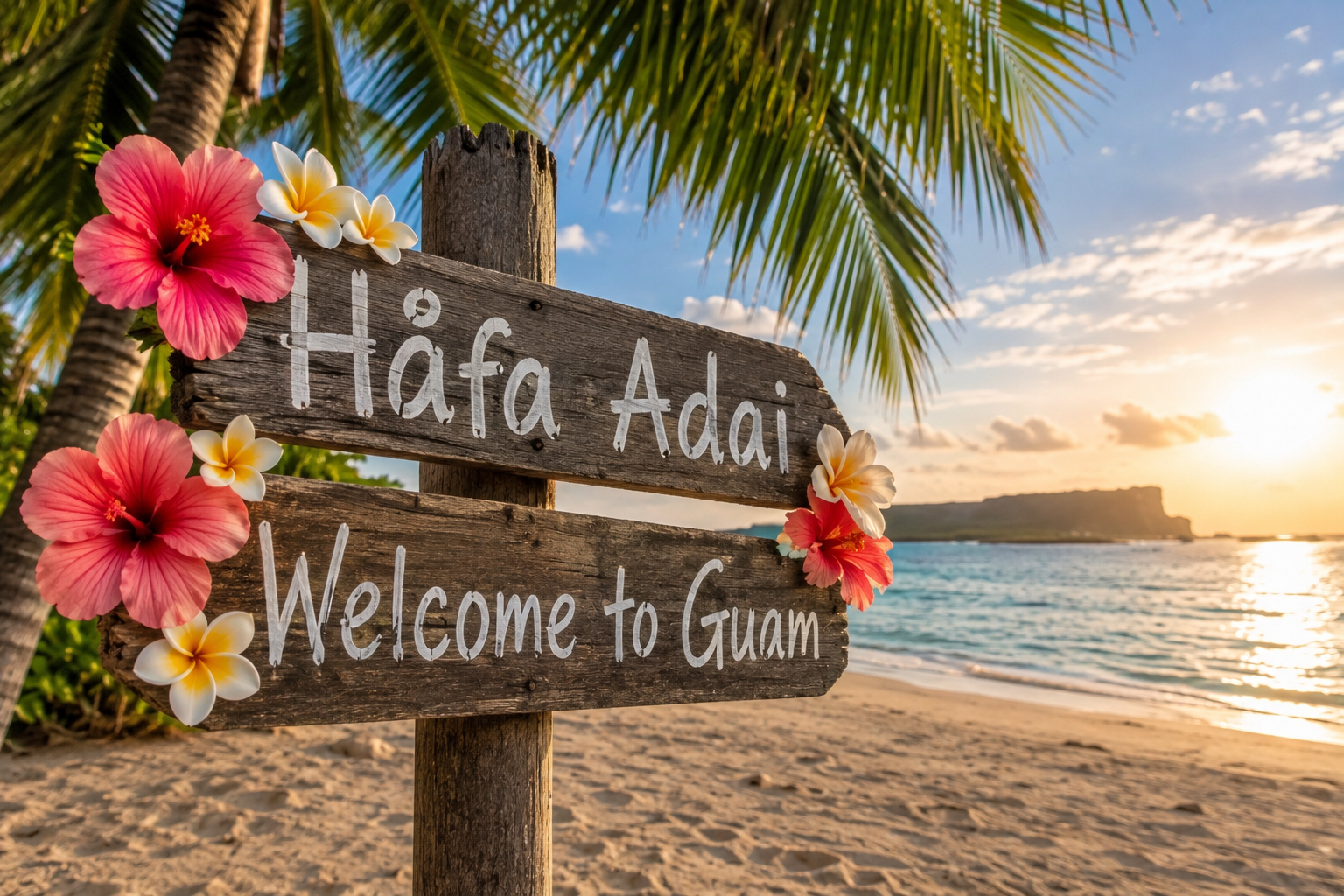
For many visitors arriving on Guam, one of the first words they may hear is “Håfa Adai.” A greeting, a way of saying hello, and one of the most recognizable expressions associated with the island. But for the people of Guam, Håfa Adai represents so much more than a simple greeting.
The Håfa Adai spirit reflects a way of welcoming others through hospitality, respect, generosity, family, community, cultural pride, connection, and resilience. It can be found in the way people interact with their neighbors, welcome guests, support local businesses, gather with family, and participate in community life.
The phrase itself may be short, but the spirit behind it reaches far beyond the words.
For Guam, this spirit is important not only because it contributes to the visitor experience, but because it is part of what connects the island’s people to one another.
More Than A Greeting
Håfa Adai is commonly translated as “hello” in CHamoru. Visitors will hear it throughout Guam, from hotels and restaurants to local businesses and community events. The Guam Visitors Bureau describes the Håfa Adai spirit as part of Guam’s warm and welcoming atmosphere and emphasizes the importance of the island’s people in creating a memorable visitor experience.
Yet reducing Håfa Adai to a greeting overlooks the meaning that can exist behind it.
The Håfa Adai spirit can be understood through the values that shape relationships within Guam’s communities. Respect for others, generosity, caring for family, connection to community, and pride in culture all contribute to the way people welcome one another.
These values are closely connected to traditional CHamoru concepts such as Inafa’maolek, which emphasizes creating harmony and living cooperatively with others. The Guam Visitors Bureau has identified Inafa’maolek as a foundational CHamoru value, describing it as a commitment to making things good and restoring harmony through cooperation.
This understanding makes Håfa Adai more than something a visitor hears when checking into a hotel or entering a business. It becomes a reflection of how people choose to treat one another.
A Spirit Rooted in Community
Guam’s culture has been shaped by thousands of years of CHamoru history, followed by centuries of outside influence, colonialism, war, and migration. Despite these changes, CHamoru culture has continued to evolve while maintaining connections to family, community, language, food, traditions, and the island itself.
Community has long been an important part of island life
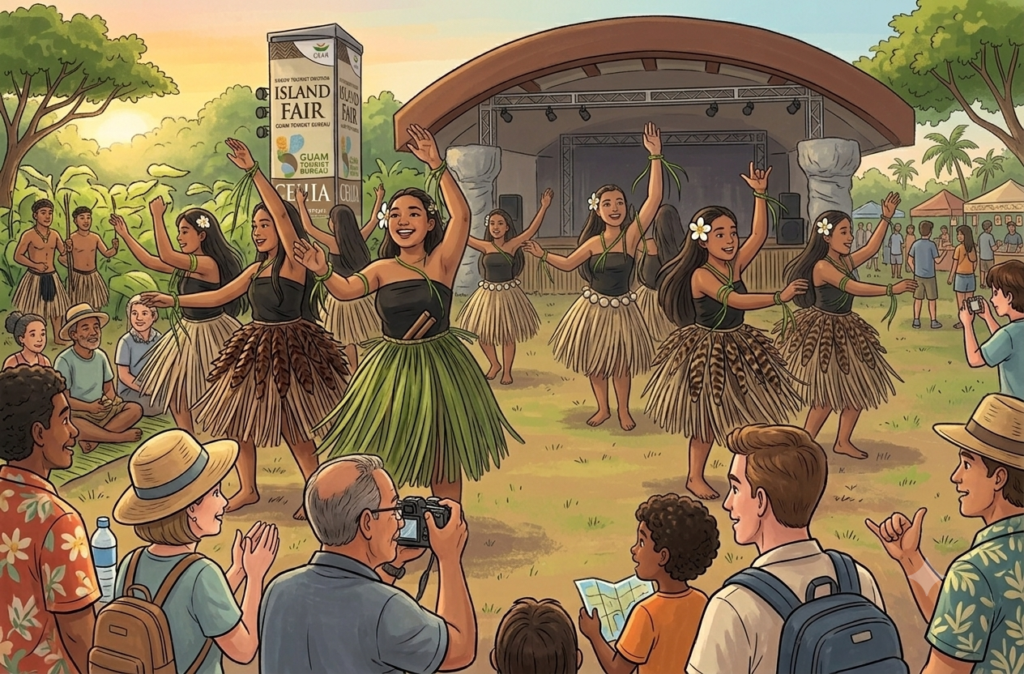
Families gather for celebrations, villages come together for fiestas and community events, and people continue to share food, stories, and traditions. Guam’s community festivals provide some of the clearest examples of how culture and community continue to come together. Guam’s cultural traditions are not limited to museums or historical sites; they continue to exist in everyday life.
The Håfa Adai spirit can be found in these everyday interactions.
It can be a neighbor helping another neighbor. It can be a family preparing food to share with others. It can be residents coming together during a community event or helping one another through difficult circumstances. It can be a local business owner taking the time to talk with a customer or explain the story behind a product.
There is no singular place where the Håfa Adai spirit exists. It exists wherever people choose to connect, care for one another, and extend a sense of welcome.
Hospitality as a Way of Life
Hospitality is an important part of Guam’s tourism industry, but it is not something that exists only because visitors come to the island.
Guam’s hospitality is also part of how residents interact with one another.
For generations, CHamoru families and communities have maintained traditions centered around family, respect, sharing, and caring for others. These values continue to influence how people interact today. The University of Guam has highlighted CHamoru values including Inafa’maolek and chinchule’, describing them in terms of living in harmony, reciprocity, respect, humility, kindness, and social responsibility toward members of the community.
That distinction matters.
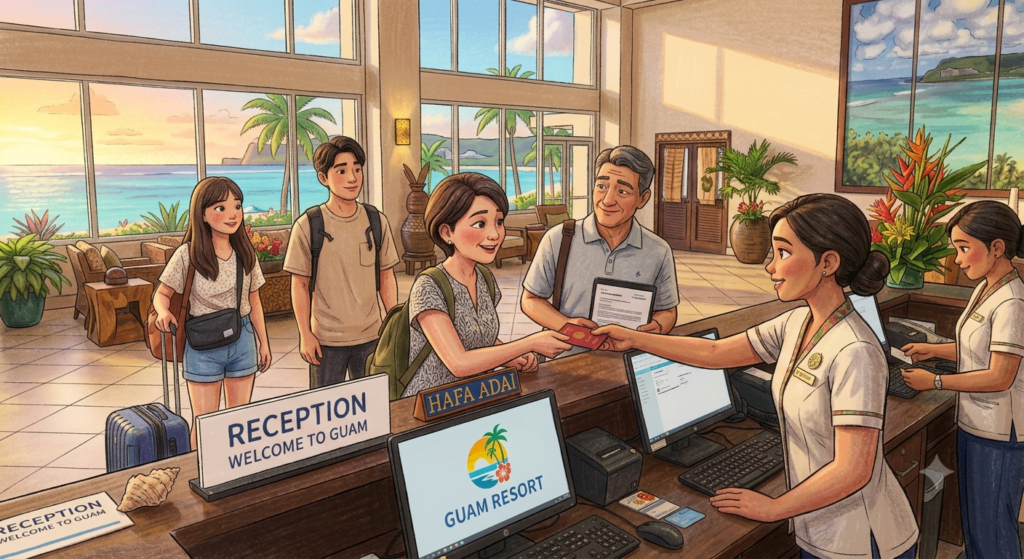
A visitor may experience hospitality through a hotel employee greeting them, a restaurant server helping them choose a meal, or a tour guide explaining Guam’s history. These professional interactions are important to the visitor experience.
But visitors can also experience hospitality in less formal ways.
It can happen when a local recommends a restaurant, when someone explains how to pronounce a CHamoru word, when a family shares food, when a vendor talks about their business, or when a resident takes the time to help someone unfamiliar with the island.
These interactions can give visitors a glimpse of Guam that cannot be created through a tourism package alone.
Sharing Guam Through Its People
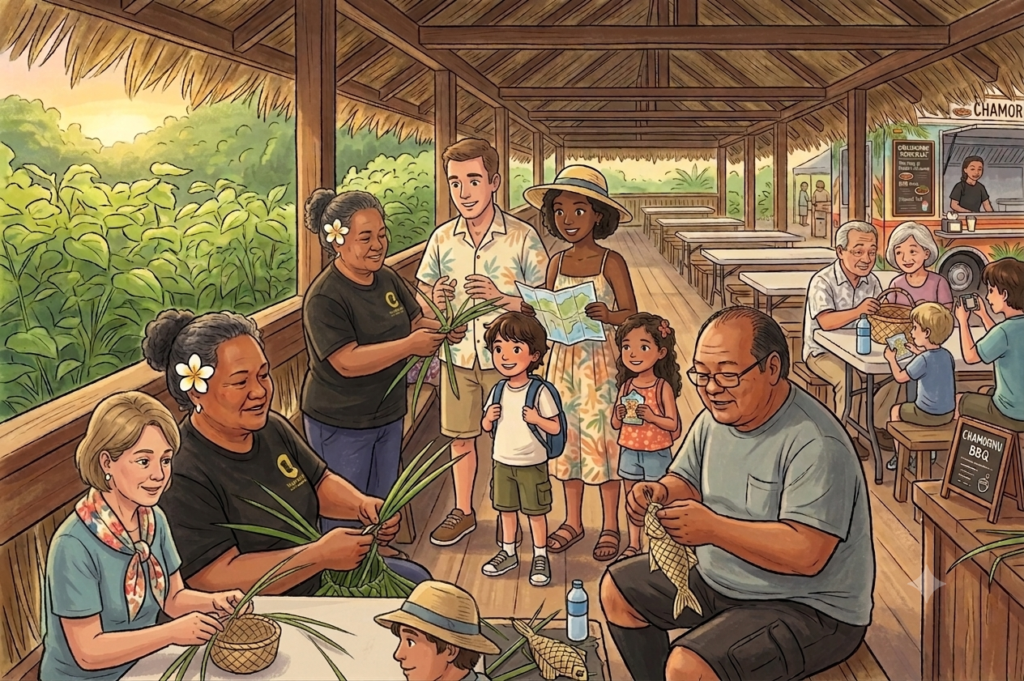
For visitors, experiencing Guam is about more than seeing its beaches, staying at its resorts, or visiting major attractions. Experiencing Guam through its people, stories, and culture allows visitors to better understand the island and the community that calls it home.
Local businesses have an important role in that process.
A restaurant can introduce visitors to CHamoru flavors. An artisan can explain the meaning behind a handmade craft. A tour operator can share stories about Guam’s history. A cultural performer can introduce visitors to traditional music and dance. A museum can help visitors understand the experiences that shaped the island.
Each interaction provides another opportunity for visitors to understand Guam through its people.
The Guam Visitors Bureau describes Guam’s culture as living and genuine, noting that the CHamoru language continues to be used and celebrated across the island. It also encourages visitors to learn simple CHamoru greetings as a way to connect with local culture.
This exchange is important because culture becomes more meaningful when it is experienced through connection.
Visitors are not simply observing Guam from a distance. They are interacting with people, hearing stories, tasting food, learning traditions, and becoming part of the community’s shared spaces, even if only for the duration of their visit.
The Håfa Adai Spirit and Tourism
Guam’s tourism industry depends on more than the island’s natural beauty. The industry has also had to demonstrate resilience through major challenges, making the strength of Guam’s communities and the experiences they provide especially important to the island’s tourism future.
Beaches, clear waters, and tropical scenery may attract visitors, but the experience they have with the people of Guam can influence how they remember the island.
The Guam Visitors Bureau itself describes Guam as a destination known not only for its natural beauty, history, and culture, but also for the warmth of its people.
That warmth can become one of Guam’s greatest tourism assets.
Visitors can travel to destinations around the world that offer beautiful beaches, comfortable hotels, and exciting attractions. What can make one destination stand out from another is often the way people feel while they are there.
A visitor who feels welcomed may be more likely to speak positively about their trip, recommend Guam to friends and family, share their experiences online, or consider returning in the future.
On a small island, these conversations can carry significant value.
A positive visitor experience can travel far beyond Guam through word of mouth, social media, and personal recommendations. The way residents and businesses welcome visitors therefore becomes part of how Guam is represented to the outside world.
Hospitality is not simply an element of tourism marketing. It is part of the experience that visitors take home with them.
When Visitors Become Part of the Community
One of the unique aspects of visiting a small island is the opportunity to interact with the people who live here.
Visitors may begin their trip as tourists, but they can experience Guam in a more meaningful way when they step beyond the traditional tourist environment.
Shopping at a local market, eating at a family-owned restaurant, attending a village festival, visiting a museum, learning about CHamoru history, or simply having a conversation with a resident can create moments of connection.
These experiences allow visitors to see that Guam is not simply a destination designed for tourists. It is a home.
Families live here. Businesses are built here. Farmers grow food here. Artists create here. Children go to school here. Communities celebrate and face challenges here.
When visitors understand this, their relationship with the island can become more respectful and meaningful.
The Håfa Adai spirit invites visitors not only to experience Guam, but to understand the people who call it home.
Hospitality Goes Both Ways
While Guam’s hospitality is an important part of welcoming visitors, the responsibility for a meaningful experience does not belong entirely to the community. Visitors also have an opportunity to participate.
They can support local businesses instead of relying exclusively on large chains. They can purchase locally made crafts and products, try CHamoru food, attend cultural events, and take time to learn about the island’s history. They can ask questions and listen to stories. They can respect cultural traditions and the places they visit. They can recognize that the people they meet are not simply part of the tourism experience—they are members of the community.
This creates a two-way exchange. Guam welcomes visitors, and visitors can respond by showing respect and genuine interest in the island.
When that happens, tourism becomes more than an economic transaction. It becomes an opportunity for cultural exchange and connection.
Why the Håfa Adai Spirit Matters at Home
The importance of the Håfa Adai spirit does not end when a visitor leaves Guam. If the spirit is truly part of the island’s identity, it must also continue to exist within the community itself.
A community built around respect, generosity, and connection is more likely to look after its people and its surroundings. Caring for neighbors, supporting local businesses, preserving cultural traditions, and taking pride in the island are all ways that community members can contribute to Guam’s future. That same sense of responsibility is important to creating a sustainable tourism future for Guam.
The Håfa Adai spirit can also be especially important during difficult times.
Guam has experienced typhoons, economic disruptions, public health challenges, and other hardships throughout its history. Resilience has repeatedly required people to rely on one another.
The willingness to help, share resources, and support neighbors reflects a broader understanding of community responsibility. This is why preserving the Håfa Adai spirit should not be viewed solely as a tourism strategy. It is part of preserving the character of Guam itself.
Without that sense of connection, hospitality, and care, something essential to the island’s identity could be lost. Visitors may still arrive for the beaches and attractions, but they would miss an important part of what makes Guam different.
Keeping the Spirit Alive
The Håfa Adai spirit cannot be preserved simply through signs, advertisements, or tourism campaigns. It has to be practiced.
It can be practiced when businesses welcome customers and take pride in sharing Guam’s stories. It can be practiced when families teach younger generations about their culture. It can be practiced when residents support local entrepreneurs, participate in community events, and help their neighbors.
It can also be practiced when visitors make an effort to understand the place they are visiting.
Guam’s cultural identity continues to evolve, but that does not mean its traditions have to disappear. The island’s culture has survived significant historical changes while continuing to influence daily life.
Keeping the Håfa Adai spirit alive means allowing that culture of hospitality and community to continue evolving while remaining rooted in the values that have long connected the people of Guam.
A Welcome That Goes Beyond Words
Håfa Adai may be one of the first words a visitor hears when arriving in Guam, but its meaning can continue long after the greeting.
For Guam, hospitality is more than a tourism product. It is part of community life.
It helps create meaningful experiences for visitors, strengthens relationships among residents, and allows the island to share its culture with the world. When visitors leave Guam with positive memories of the people they met and the way they were welcomed, they carry a piece of the island’s spirit with them.
The future of Guam’s tourism industry will continue to depend on its attractions, businesses, and infrastructure, but its people will remain at the center of the visitor experience.
The Håfa Adai spirit is not something created for tourism. It is something that belongs to Guam’s people. And when visitors experience it, they are experiencing something that cannot be manufactured, packaged, or purchased.
They are experiencing Guam through its people.


Comment on “A Welcome That Goes Beyond Words: The Håfa Adai Spirit”
Comments are closed.